


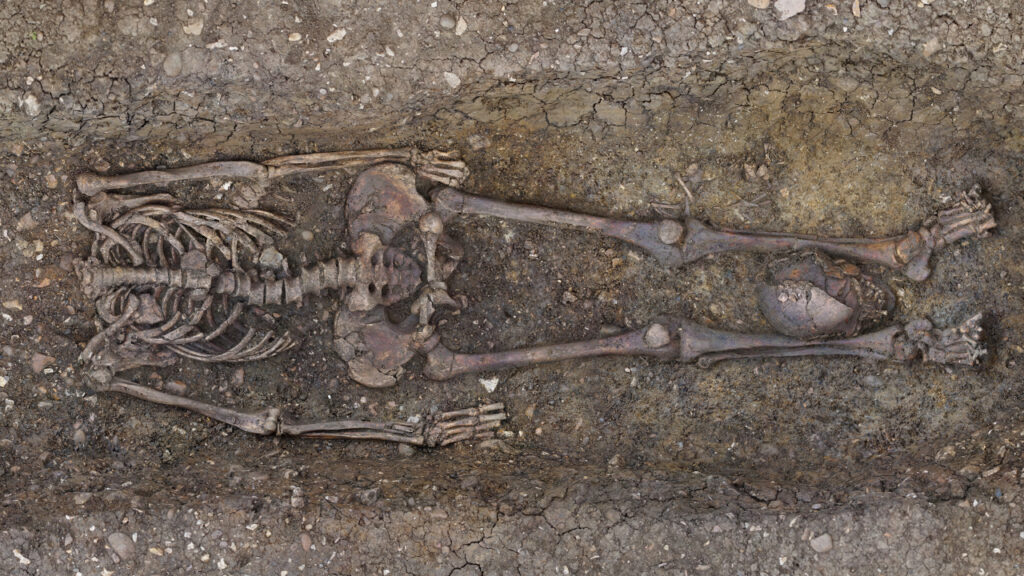
A high-speed rail project led to the gruesome discovery of dozens of decapitated corpses just outside a major metropolis.
United Kingdom archeologists have announced the discovery of about 40 2,000-year-old decapitated corpses buried in an ancient Roman village unearthed during the construction of the HS2 project, an hour northwest of London.
In addition to the ruins of the village, artifacts and ancient coins, they found burial sites for more than 400 people, about 10% of whom had been decapitated. They could have been outcasts or criminals, according to authorities, but the nature of their beheadings was not fully clear.
Roman lead die uncovered during archaeological excavations at Fleet Marston, near Aylesbury, Buckinghamshire. Excavations took place during 2021. (HS2)
DOZENS OF ARMY CAMPS FROM ANCIENT ROME DISCOVERED
Some of those had their skulls placed between their legs or at their feet, according to the researchers.
“One interpretation of this burial practice is that it could be the burial of criminals or a type of outcast, although decapitation is well-known elsewhere and appears to have been a normal, albeit marginal, burial rite during the late Roman period,” the HS2 said in a statement over the weekend.
Roman skeleton with head placed between legs uncovered during archaeological excavations at Fleet Marston, near Aylesbury, Buckinghamshire. Excavations took place during 2021. (HS2)
Researchers expect to learn more about Britain’s Roman era and how residents once lived there.
“All human remains uncovered will be treated with dignity, care and respect and our discoveries will be shared with the community,” Helen Wass, HS2 Ltd’s head of heritage.
Search teams also discovered ancient pottery, an old lead die, as well as other tools and ornaments.
HS2 said that they also found hundreds of ancient coins, suggesting “trade and commerce” in the town, which was situated along a defunct road between the former Roman cities of Verulamium, now St. Albans, and Corinium Dobunnorum, now Cirencester.
The HS2 rail system is a planned cross-country, high-speed line. Since 2018, HS2 has investigated about 100 archeological sites, including the Fleet Marston village.
CLICK HERE TO GET THE FOX NEWS APP
A team of over 50 archeologists began excavating the site last year, according to the project organizers.
Climate change activists have protested the rail project, demanding the government halt the construction. Last month, London police evicted a group of them from a city park, where they had set up an encampment to demand an end to the project.
The Associated Press contributed to this report.